
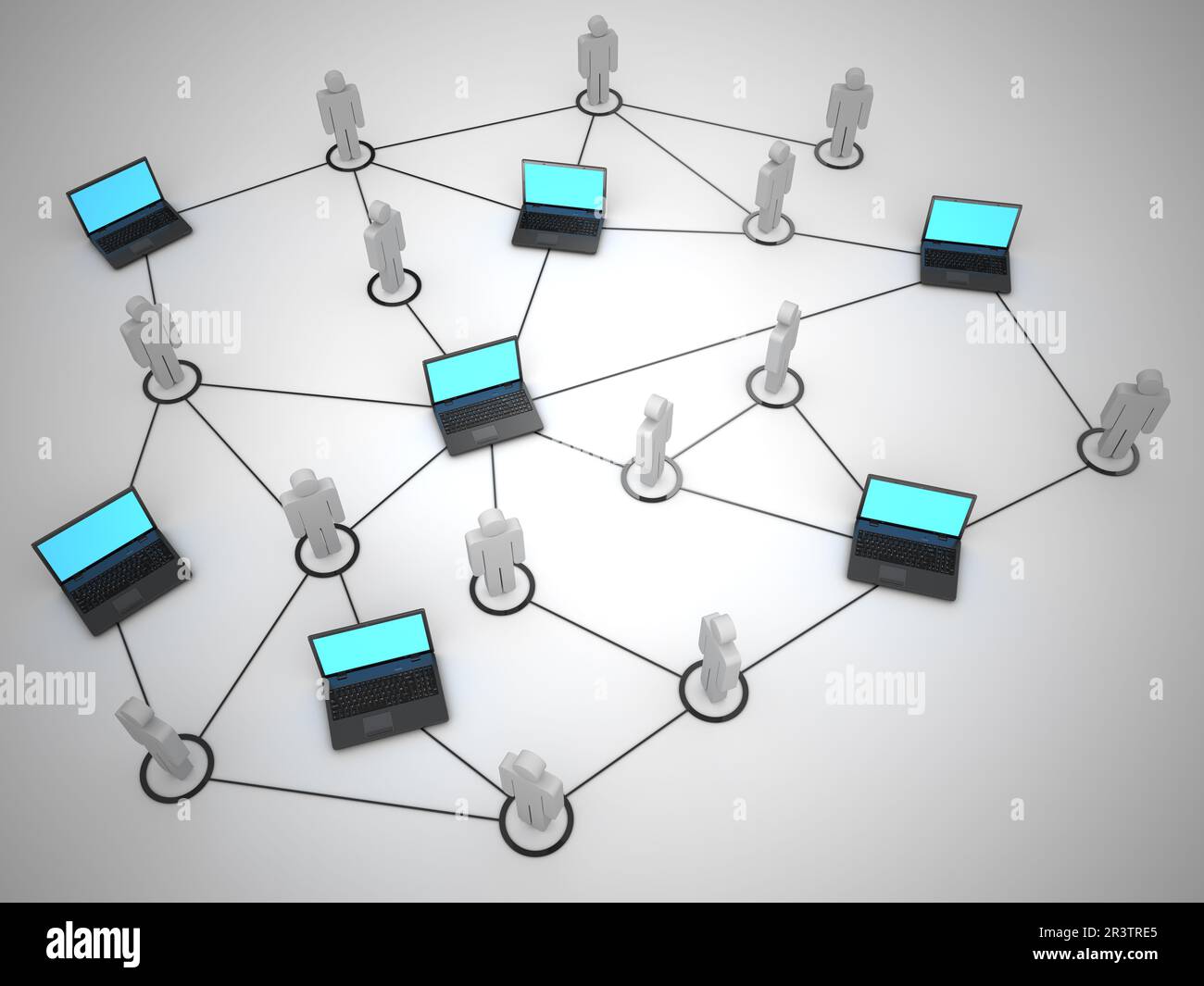
UNIT-I Basic Concepts: Components of data communication, distributed processing, standards and organizations. Line configuration, topology, Transmission mode, and categories of networks. OSI and TCP/IP Models: Layers and their functions, comparison of models. Digital Transmission: Interfaces and Modems: DTE-DCE Interface, Modems, Cable modems.
UNIT-II Transmission Media: Guided and unguided, Attenuation, distortion, noise, throughput, propagation speed and time, wavelength, Shannon capacity, comparison of media. UNIT-III Telephony: Multiplexing, error detection and correction: Many to one, One to many, WDM, TDM, FDM, Circuit switching, packet switching and message switching. Data link control protocols: Line discipline, flow control, error control, synchronous and asynchronous protocols, character and bit oriented protocols, Link access procedures. Point to point controls: Transmission states, PPP layers, LCP, Authentication, NCP. ISDN: Services, Historical outline, subscriber’s access, ISDN Layers and broadcast ISDN.
UNIT-IV Devices: Repeaters, bridges, gateways, routers, The Network Layer; Design issues, Internetworking, Network-Layer in the internet.
UNIT-V Transport and upper layers in OSI Model: Transport layer functions, connection management, functions of session layers, presentation layer and application layer.
Referential Books: 1. A.S.Tanenbaum, “Computer Networks”; Pearson Education Asia, 4th Ed.2003. 2. Behrouz A.Forouzan, “Data Communication and Networking”, 3rd Ed. Tata MCGraw Hill, 2004. 3. William stallings, “Data and computer communications”, Pearson education Asia, 7th Ed., 2002.
- Teacher: Mamata Panda